

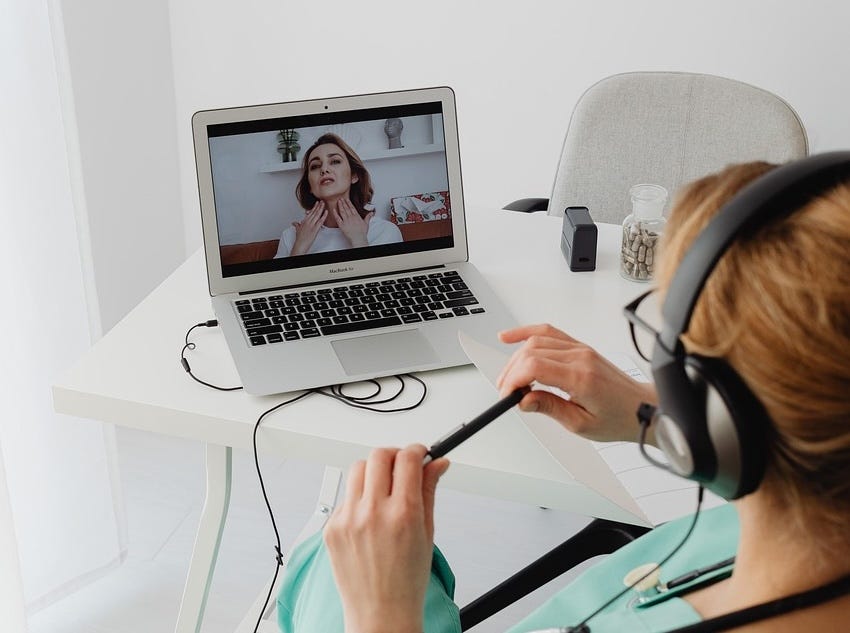
I recently had a great conversation with Empassion CEO Robin Heffernan, which resulted in this Q&A on Hospice News.
But here, I want to share her valuable take on telehealth. I had to cut this from the Hospice News article due to length, but Robin takes an interesting stance: Doing nothing for a patient is often better for them than providing the type of telehealth that is available.
If you’re interested in the impact of palliative care on payer quality measures, be sure to check out the piece on Hospice News..
What are you seeing in terms of the integration of telehealth and palliative care these days?
We’re seeing folks that have tried telehealth models in palliative care. I think the results have been quite minimal, to be honest. You would intuitively think, well, something is better than nothing.
But in fact, I’m not sure that the telehealth models are even better than doing nothing on the patient, and I think that’s largely because if you think about like, what is palliative care supposed to be doing, it’s supposed to be understanding where is the patient truly at in their disease progression. How are they and family members dealing with this emotionally? What other factors are influencing it?
Oftentimes we’ll go do an initial assessment, and the home environment is very telling about how the patient is navigating through. Do they live by themselves? Do they actually have family support? Do they have food in their fridge? Do they need home modifications? All of these things are sort of very hard to assess on the phone.
The other main point of palliative care is to provide additional education to the patient and family about the likely progression of this disease. Let’s think ahead. Would you want to be intubated? Would you want to be resuscitated? Would you want to have these medical interventions if something happened?
That’s just hard to do on the phone with someone and to gain their trust around it. And ultimately, you need to get goals-of-care documented from the patient, so that if they do have an acute event and they go to the hospital, the hospital actually knows what the patient wants done. And so if you haven’t built trust with the patient, you don’t have those documents, then they end up having a shortness of breath episode, they call 911.
They go to the hospital, and all of a sudden they’re having chest compressions and MRIs and a bunch of labs. And then the family member shows up the next hour and is like, “What are you doing? My mother didn’t want all this.”
Telehealth is hard in and of itself. Where we have seen it be successful is if you have an in-home program, and so the patient is being seen on a regular monthly basis by in-home providers, and then they’re getting phone calls in between. Maybe the social workers are following back up with the patient, or you’re helping the husband, for example, figure out a meal benefit. That’s great, and that’s been really successful. Actually, some of our top providers do that religiously. But on its own, I think telehealth is pretty hard
When you say that the impact of tele-palliative care has been minimal, are you talking in terms of the impact on patient outcomes or the financial ramifications? Could you put a finer point on that?
It’s across the board. So, you can look at clinical outcomes, and it doesn’t really change those measures. Does it reduce the number of acute admissions? No. Does it reduce ED visits? No. Does it increase satisfaction of the patient and the family when you survey them? Generally not.
A lot of that is actually based on how good the hospice provider is. Then, from a financial standpoint, if you’re not reducing the admissions, and you’re not reducing the ED visits, and you’re not getting someone to hospice more often, you’re not saving any money.
I think some of those use cases are really valuable. On the other hand, if you have a palliative care program, and all that entails is someone calling the patient once a month, that’s not a good use of funds. It’s not good for the patient, certainly not good for the taxpayer dollars.
It’s more nuanced. For example, hospice recertification on a telehealth basis, that’s a good idea. That’s been proven to be effective, particularly in rural locations. That one should continue. Should you be able to do telehealth visits in between in-person visits? Yeah, that makes sense. Should you be able to do an initial palliative visit by telehealth? That’s debatable in my mind.