

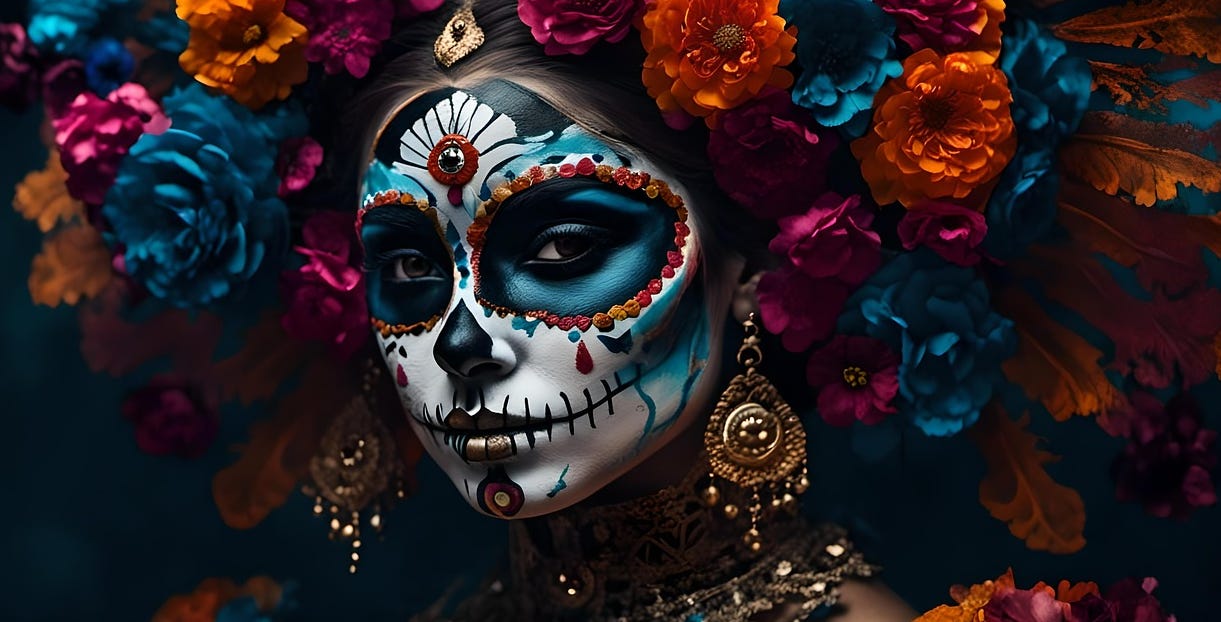
The year is in twilight, and it comes with a fascinating ritual. In a time of falling leaves and wilting flowers, we come to acknowledge the presence of death – a subject we tend to avoid most of the time.
Customs on this vary from culture to culture, whether it be dressing up as a mummy or a ghost on Halloween or celebrating the beautiful Mexican Dia de los Muertos tradition. (In fact, if you are ever in Chicago this time of year, our National Museum of Mexican Art holds an excellent, annual exhibit and festival on Dia do los Muertos. I highly recommend.)
We decorate with death imagery. When I walk around my neighborhood, I see a cadre of 12-foot skeletons looming over doorways. I want one but have nowhere to put it. I have taken measurements. It won’t fit in my living room.
These traditions and practices are fun, but they also invite deep thought about the end-of-life – an invitation that I wish more would accept. This time of year is a perfect moment to reflect on our mortality and how we would face it if given a choice.
Some hospices get into the spirit. Amavi Home Health and Hospice Services in California has decorated its facility to “serve as a reminder that life is filled with moments of joy, even during challenging times,” according to the organization’s website.
At Crossroads Hospice and Palliative Care, dementia patients work on Halloween-themed crafts. Community Hospice and Palliative Care in Florida holds a “Halloween Doors and More” event that brings the community together in a celebration of the season, featuring a series of 14-foot decorated doors.
Central Wyoming Hospice & Transitions invites Trick-or-Treaters inside its offices, and the Shrivers Hospice Foundation holds an annual Halloween ball, “a spooktacular event with heart.”
The hospice nurse, end-of-life educator and author Barbara Karnes writes on her website about visiting patients in costume, which seemed to brighten their days.
Events and practices like these help make hospices feel like an active part of their communities. It helps build relationships with community members, and it can make hospices seem more friendly and less scary. Lots of people, as we know, are terrified to even talk about hospice. That needs to change.
I just spoke with Paul Kusserow, board chair at Elara Caring and former CEO of Amedisys for a Hospice News story. We didn’t talk about Halloween or related traditions, but I did ask him about the most important things hospices can do to grow in 2026. This is part of what he said:
“The thing to do right now, particularly with the baby boom population, is to continue to educate people about the benefits of hospice. The most paradoxical thing about hospice is, if you go early enough, you’re going to the benefits are so much better than what you get if you pass away in an institution.”
Events that bring hospices closer to front-and-center in their communities can help advance this purpose. This is true year-round.
Does your hospice do anything to celebrate this time of year? How do you foster conversations about the end of life during the darker days of autumn? In what ways do you participate in your communities beyond providing clinical care? I am curious to know.