

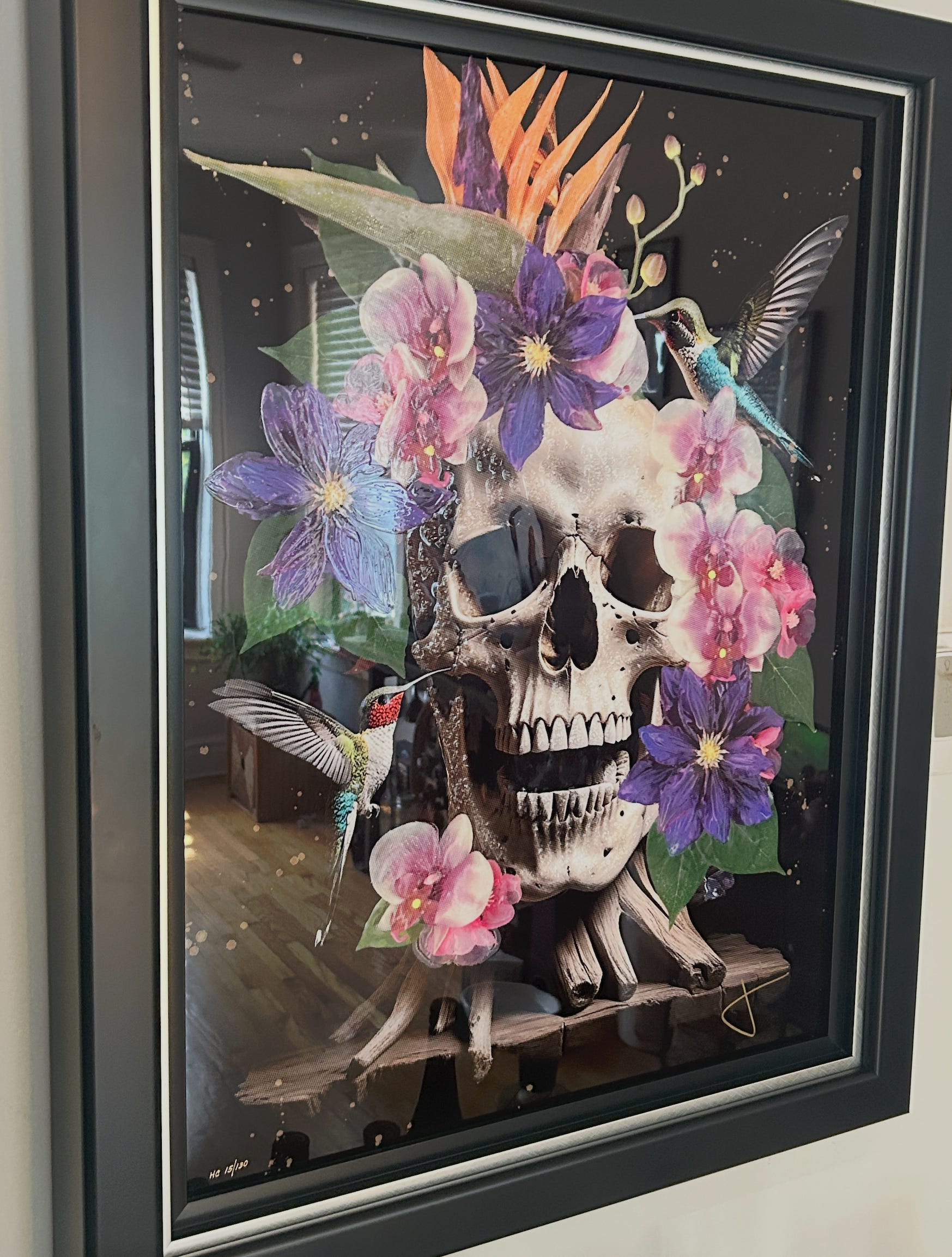
I may go a little overboard when it comes to art.
My three-bedroom apartment has 113 art pieces on the walls, stacks of books, and lots of little sculptures or pottery.
We acquired some new art pieces recently, and this past weekend it was time to hang them. It required moving a lot of things around. The photo above is one the new paintings, by U.S. artist Jay Bonadio.
Art illuminates life. It can educate and inspire us, help us to feel, and better understand our experience as we move through this glorious but painful Earth. And it got me thinking. In what ways does art address the specter or experience of death? What about hospice care?
My little light bulb went off, and it occurred to me that this would be something to write about. After some ponderation, I decided to start with movie recommendations that deal with hospice, palliative care and the end of life.
I initially thought about doing books on these subjects, but I have so many I don’t know where to start. Maybe I will tackle that in the future. I will probably have to break them down into categories like nonfiction, fiction and graphic novels. We’ll see.
So here, in no particular order, are my quick reviews of several films that address end of life issues and hospice. This is not a power ranking, nor is it an exhaustive list. These are just a few that have had an impact on me.
End Game
End Game is a powerful and emotional documentary directed by Rob Epstein and Jeffrey Friedman. The film focuses on patients who are nearing death and the doctors, nurses, families and caregivers who support them. Set in hospitals and hospice facilities in San Francisco, the documentary explores difficult questions about death, dignity and the meaning of a good life.
One of the strongest aspects of End Game is its honest portrayal of the emotional challenges surrounding death. Rather than treating death only as a medical problem, the film shows the importance of listening to patients and respecting their wishes. The personal stories make the documentary deeply moving and encourage viewers to think about how society approaches end-of-life care.
The movie reminds viewers that even when a person cannot be cured, they can still receive care, comfort and respect.
I would also encourage you to check out the documentary Extremis, which deals with similar subject matter through the eyes of clinicians.
His Three Daughters
His Three Daughters is an emotional family drama directed by Azazel Jacobs. The film follows three sisters — Katie, Rachel, and Christina — who come together in their father’s New York apartment as he approaches the end of his life and enters hospice. Although they share the same father, the sisters have very different personalities, beliefs and relationships with him.
One of the strongest parts of the film is the acting. Natasha Lyonne, Elizabeth Olsen and Carrie Coon give powerful performances and make the sisters’ arguments and emotional struggles feel realistic. Their conflicts show how family members can carry years of anger, jealousy, guilt, and unresolved feelings.
The film is also effective because it focuses on ordinary family moments rather than dramatic events. The sisters argue about their father’s care, their childhood, and their different choices in life. As the story develops, they begin to understand each other better and recognize the importance of their family connection.
The Elephant in the Room
This 2020 drama directed by Allen R. Freeman focuses on a hospital-based palliative-care team caring for terminally ill patients. Senior Reporter Holly Vossel wrote about the film on Hospice News back when it came out.
The story centers on nurse practitioner Michael Lafata and his relationship with a terminally ill cancer patient, Cooper Davis. The film is based on the book “Resilient Hearts: It’s All About the Journey,” by Bonnie Freeman, herself a supportive care nurse practitioner.
The Elephant in the Room is an emotional drama that explores death, compassion, friendship and the importance of finding hope during difficult moments. One of the strongest parts of the movie is its message about end-of-life care. The film shows that patients can still experience laughter, friendship, love and dignity during their final days, while simultaneously illustrating the pain, suffering and grief that we all experience during such times.
One of the things that struck me in the film was that it depicted a goals-of-care conversation as the patient began to accept his terminal diagnosis. It also followed the clinicians’ own emotional journeys as the person they are caring for approaches death.
Griefwalker
Griefwalker is a powerful documentary that explores grief, death and the process of facing loss. The film follows Stephen Jenkinson, a Canadian teacher and writer who works with people experiencing grief. Rather than presenting grief as something that should quickly be overcome, the documentary encourages viewers to understand grief as a natural and meaningful part of life.
One of the most interesting aspects of Griefwalker is its message that death and grief should not be avoided. Jenkinson challenges the idea that people should simply “move on” after losing someone. Instead, he suggests that grief can teach us to appreciate our relationships and understand the value of the people we love.
Overall, Griefwalker is a deep and thought-provoking documentary about accepting death and honoring the people we lose. It shows that grief is not something that needs to be fixed but an experience that can change how we understand love, life and relationships.
The Nurse with the Purple Hair
The Nurse with the Purple Hair is an inspiring and emotional film that highlights the important role nurses play in caring for patients and their families. The story shows that nursing is about much more than medical treatment. It requires compassion, patience, communication and the ability to support people during some of the most difficult moments of their lives.
One of the most memorable aspects of the film is the nurse herself. Her purple hair makes her stand out, but it also represents her individuality and willingness to connect with patients in a personal way. She demonstrates that a healthcare professional can be both professional and compassionate while still being herself.
The film also shows the emotional challenges nurses face in caring for sick or dying patients and how stressful and heartbreaking that can be. Healthcare workers are human too.
Among the film’s messages is that kindness and human connection are just as important as medical care at the end of life.
I hope some of you will check these films out and enjoy them. If you have seen them, I would love to hear your thoughts. Also, do you have any movies in this vein that you would recommend?
I loved His Three Daughters. It was a real-life look at the intense differences that can exist among adult children caring for a parent and the deep stress (and love) that situation produces.
And speaking of intense, The Last Ecstatic Days and Paper Flowers rank high on my list of caregiving at end of life movies. The willingness of the person dying to speak frankly with loved ones about their wishes and the willingness of those loved ones to follow through is deeply inspiring.
Excellent suggestions-thank you!