

I asked an AI program whether I should enter hospice, thinking it would give me bad advice so I could complain about it. However, it actually gave me good advice, so I am going to write about something else.
But I will give you a couple of nuggets from the AI’s response:
“[Entering hospice] depends on your medical situation, your goals, and what matters most to you. Hospice isn’t about giving up — it’s a type of care focused on comfort, symptom management, and quality of life when a person’s illness is no longer expected to be cured. Choosing hospice doesn’t mean you stop receiving care. Hospice teams typically include doctors, nurses, social workers, chaplains, aides and volunteers who work together to manage symptoms and support both you and your family.”
The app had a lot more to say, including a list of questions to ask your physician, and some to discuss with your family.
I was a little impressed that it said hospice isn’t “giving up” and specified that doesn’t mean that you stop receiving care.
This was an interesting experiment in a time when patients and families will be using AI more extensively in health care decision making. For instance, I also asked the AI platform for “the best hospice in my zip code,” and it gave me a list of five. More families will be doing this in the future.
I want to talk about one other thing this week, a recently introduced piece of legislation.
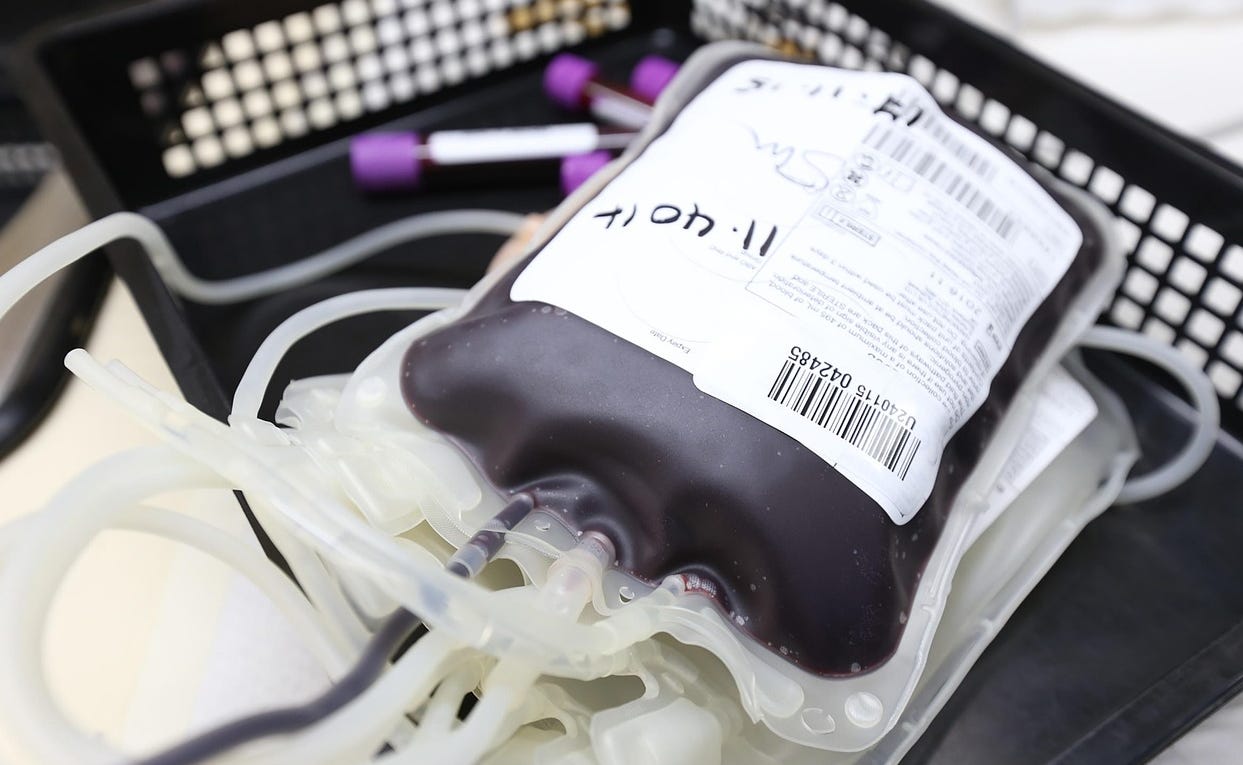
U.S. Rep. Debbie Dingell (D-Mich.) recently introduced the Improving Access to Transfusion Care for Hospice Patients Act. If Congress were to approve this, it would direct the Center for Medicaid and Medicaid Innovation (CMMI) to develop a demonstration model to test payments for transfusions separate from the Medicare hospice per diem rate.
Sen. Jacky Rosen (D-Nev.) has introduced a companion bill in the Senate. Rosen also put forth similar legislation in 2023 and again in 2024.
Having access to transfusions was cited as a main priority among 200 adults with advanced blood cancer in a recent study published in the American Medical Journal. Patients with blood cancer may perceive hospice as “incompatible” with their current treatments, including transfusions, researchers indicated in the study.
This could be a boon for patients if it comes to pass. More patients may choose to elect hospice if they are no longer afraid of losing access to transfusions.
Research from the American Society of Hematology indicates that patients with hematologic malignancies have low rates of hospice utilization, and they often enroll during the last three days of life.
Spanning from Oct. 2020 to July 2021, researchers surveyed patients with blood cancers from two large cancer centers about their perceptions of different services routinely offered in hospice settings, as well as others that are less routine such as transfusion access, transportation, peer support and telemedicine.
Among the 102 participants, 78.4% indicated that they did not have more than one transfusion, with patient responses “overwhelmingly” rating blood transfusion access as the most important factor in their hospice decisions, according to researchers.
Transfusions can aid in palliation, but patients often do not receive them due to high costs and questions as to whether they fall within the scope of the Medicare Hospice Benefit. This is also true for other high-acuity services like palliative radiation, chemotherapy and dialysis.
A new payment model for transfusions could improve hospice utilization among patients in need. However, this would be more of a long-term solution than a quick win.
First, Congress would have to enact the bill. Then, CMS would have to design a payment model demo, which would likely last several years. It would then take a year or more to analyze the results of the demonstration. If it passes muster and becomes a permanent benefit, it would also take considerable time to implement.
Nevertheless, this is a step in the right direction.
I am glad to see that this issue is being discussed in the halls of government. This bill is not the first time this issue has come up.
The U.S. Centers for Medicare & Medicaid Services (CMS) in its 2025 proposed hospice rule featured a request for information (RFI) on the utilization of higher-cost palliative treatments under the Medicare Hospice Benefit. The agency posed similar queries in its proposed rule for 2024. The 2025 RFIs sought greater clarity on the financial risks and costs that providers say represent barriers to providing those services.
The Medicare Payment Advisory Commission (MedPAC) also took up this question in 2025 at a meeting late in the year.
After so much discussion, it would be great to see some action on this.
I do question why the bill focuses on transfusions alone, rather than the larger spectrum of high-acuity palliative services. Perhaps that spectrum is too broad for a single payment model demonstration, but to me it feels like we should be able to kill four birds with one stone and create a system that would also ensure access to radiation, chemotherapy and dialysis, when appropriate.
Furthermore, this relates to the government’s increased scrutiny on payments for non-hospice services rendered to hospice patients, which I wrote about last week. The complications around transfusions, radiation, chemotherapy and dialysis show that the issue of patient needs while in hospice is nuanced, and it is in the interest of patients, providers and payers to establish appropriate payment pathways – whether within a hospice provider’s per-diem responsibility or a separate Medicare payment model – for services that are crucial for some conditions. Otherwise, people will continue to forgo hospice or receive hospice for only a brief period, undercutting the ability of hospice providers to both enhance the patient experience in the last stages of life and to save the healthcare system money and resources.
What do you think? How should Medicare handle high-acuity palliative services like transfusions?
This is another great article, and I am happy to hear that this may be getting some traction. Some hospices are paying for palliative transfusions when a patient may want to continue such treatment to make it to an important event or for symptom management reasons. We are one of those hospices. We have trouble, though, often finding a way to contract for those services. We would be thrilled to participate in a model from CMMI on this! Keep us posted!