
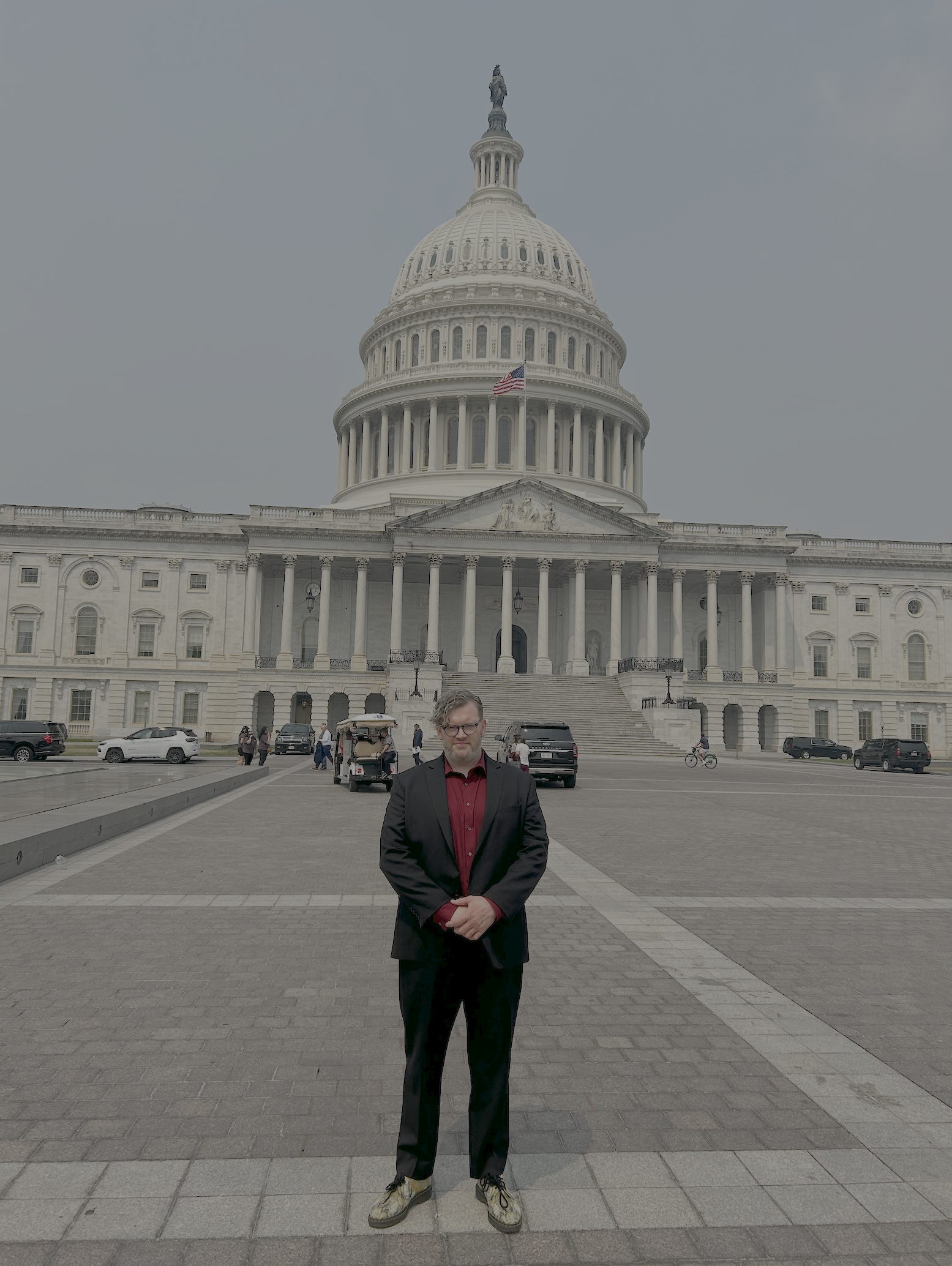
The government is turning up the heat on hospice fraudsters. However, policymakers and legislators are getting lost in partisan politics that only complicate and hinder real solutions.
Fraud causes significant harm to patients, families and the taxpayers who fund Medicare, as well as legitimate providers. This needs to stop now, and that will require a robust government response.
Both Democrats and Republicans have decried fraud in the hospice and home health space. And I understand that a certain amount of political grandstanding is a standard part of Congressional hearings and other governmental actions. Nevertheless, members of those parties are growing increasingly focused on pointing fingers at each other, which distracts from the real issues.
Consider these remarks from Rep. Jason Smith (R-Mo.), chairman of the House Ways & Means Committee:
“Democrat governors and states have let these and other fraud schemes fester and even encouraged them for years. When the truth about the systematic, systemic fraud came out, they questioned why it was their states that were under investigation. The real question is why Democrat governors like Gavin Newsom and Tim Walz allowed Medicare beneficiaries to become easy targets for fraudsters for so long. The Trump administration, on the other hand, has made fighting fraud a top priority.”
Smith in comments at a hearing on Tuesday also criticized the Biden Administration’s actions to root out fraud.
Smith is correct that Democrat-led California is a hotbed state for fraud, particularly in Los Angeles County, which has become a “poster child” for malfeasance. But he ignores the reality that fraud is also rampant in Republican-led states such as Texas and Nevada. Ohio and Georgia, both also controlled by Republicans, have also been identified as areas of concern for hospice fraud.
In March, the House Committee on Oversight and Government Reform announced that it would investigate hospice fraud occurring in California (but not Texas, Nevada, Arizona, Georgia or Ohio.) While Congress taking an interest is a positive step, the Oversight Committee’s announcement largely amounted to an attack on California Gov. Gavin Newsom, who is expected to run for president in 2028.
“In California, your administration’s Departments of Public Health, Social Services and Health Care Services all have a role in overseeing federally funded hospice programs. The Committee is concerned your administration does not have sufficient internal controls to prevent and detect fraud and is not conducting proper oversight of these hospice programs,” committee members wrote in a letter to Newsom. “As a result, Americans across the country are paying for California’s rampant hospice fraud and vulnerable patients are being exploited. California has a well-documented history of fraud in its hospice programs. Your administration has been aware of credible reports of hospice fraud for at least four years. Despite these red flags, it appears California has enabled hospice providers to defraud the American taxpayer and exploit vulnerable patients.”
But so far, California is the only state in this group to take meaningful action. It has imposed a moratorium on issuing new hospice licenses and introduced additional enforcement measures. Over the past two years, more than 280 licenses granted to new hospice operators have been revoked, according to the governor’s office.
The state has also established a hospice fraud task force, bringing together the California Department of Public Health, the California Health & Human Services Agency, the Department of Health Care Services, the California Department of Social Services, and the state Department of Justice’s Division of Medi-Cal Fraud and Elder Abuse.
Since 2019, investigations by the fraud and elder abuse division have led to hundreds of prosecutions. Meanwhile, public health officials have flagged about 300 hospices for suspected wrongdoing, and those cases are now under review for possible license revocation.
Meanwhile, Democrats are largely playing the same game. In the Tuesday Ways and Means Committee Hearing, Rep. Lloyd Dogget (D-Texas), took swings at U.S. Centers for Medicare & Medicaid Services (CMS) Administrator Dr. Mehmet Oz and Health and Human Services Secretary Robert Kennedy Jr, as well as the larger Trump Administration.
“The Trump administration has pardoned these health care criminals, fired the taxpayer watchdogs at each of the relevant agencies who detect and prevent fraud, dismissed a number of employees at CMS responsible for policing fraud, and cut essential programs that millions of Americans rely upon,” Dogget said at the hearing. “Outrageously, when anti-fraud provisions and proposals run up against some special interests that have a generous lobbyist, the anti-fraud provisions are ignored, and consumers and taxpayers pay as a result of it.”
Again, some of these remarks have some validity. Trump has pardoned a number of individuals who had been convicted of various types of fraud, though none of them were hospice operators. The administration did reduce staff at CMS and gutted inspector general offices at some federal agencies.
That said, I don’t think one can draw clear lines between those actions and the prevalence of hospice fraud. Nor do I think that complaining about these actions by Trump will protect Medicare beneficiaries or dying patients who are being ripped off or denied care.
If lawmakers are going to get involved in the fight against fraud, let’s see some real, actionable solutions to address the issue. Politicizing this process is counterproductive. We can’t stop fraud by only targeting states currently managed by a particular political party, be it Democrat or Republican. This matter requires a national, bipartisan solution that prioritizes patients above politics.
I would love to hear your thoughts on this, please feel free to leave a comment or send me a message.
“This matter requires a national, bipartisan solution that prioritizes patients above politics.” This is so true. To think protecting hospice is a one side or the other is not a big enough perspective. It is bigger than one particular party. We care for human beings. As it should go without saying, they come from ALL walks of life.