

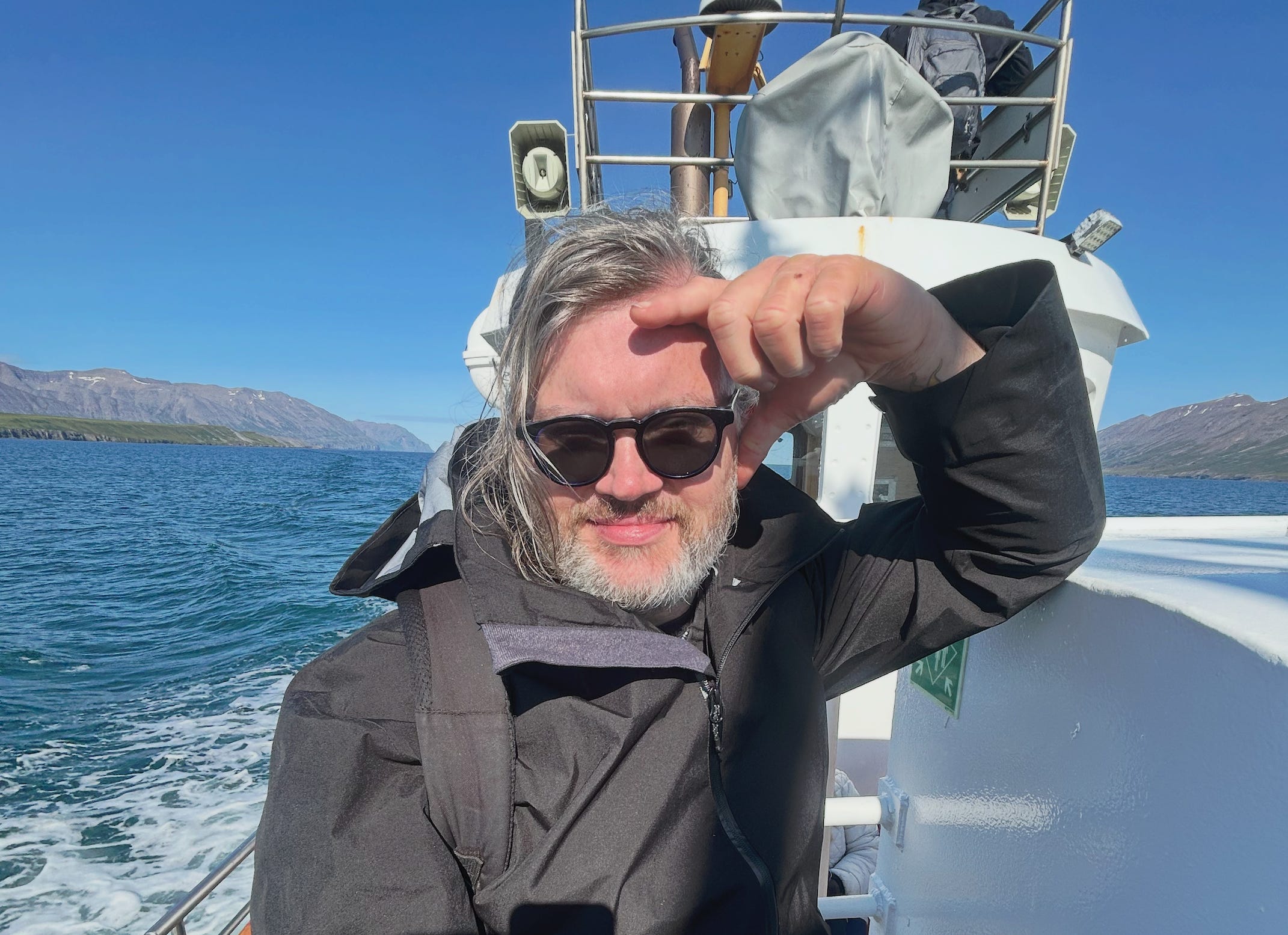
I turned 50 on Wednesday, so that was weird. This was a milestone, of course. On the one hand, it’s just one more year clicking away, but on the other, a good moment to stop and reflect a little bit.
I feel the age to a minor degree at this point. I am slowing down a little, going gray and my knees hurt sometimes, but I am overall in pretty good health and grateful for that. But other things are changing too, not because of my birthday but coinciding with it.
My relationship with my daughters has evolved as they have grown. They are 26 and 32 right now. And my relationship with my dad has transitioned in a way. I no longer lean on my parents and haven’t for a long while. Now the time has come for him to lean on me. I worry about him a lot, especially with my mom gone. He lives 1,500 miles away, and it would take me some time to get to him in an emergency. He does have a strong group of friends around him, though.
I also think about my grandson Caleb. He calls me “Boppy.” I want to be very involved in his life and guide him and his parents as best I can. I want to take care of myself so I can see him grow up.
I have struggled with depression and PTSD for much of my life, and that led to a lot of dark feelings. But now I can honestly say that I hope I live a long life so I can see the man he will become. If I am lucky, maybe I will be a great-grandfather someday. It’s possible.
As the sand in the hourglass falls, I must acknowledge that I am one step closer to death. This sounds dire but is a reality. And I need to think about what I want that to look like when the time comes. Hopefully, it’s a long way off, but I advocate for people preparing themselves before a crisis comes. So I really should do it myself.
I have thought a lot about this and have some wishes, but to date I haven’t documented anything. I know I should have by now, but I will get on that soon.
I am not alone in this negligence. Only about 36% of U.S. adults have documented their end-of-life wishes, research has shown. This often means that they receive more aggressive care than they would have preferred had they known their options and documented their choices.
This practice can also be a gateway to hospice. Advance care planning is also associated with increased hospice utilization, according to a 2025 study published in the journal JCO Oncology Practice.
Fostering greater adoption of advance care planning can bring more patients under hospices’ wings when they become eligible. Hospice census would likely grow, and more families would receive patient-centered interdisciplinary care at the end of life. This can only be a good thing.
Does your organization work to foster greater access to advance care plans, or work with other providers to do so? How do you do that? Drop a comment.
Notable Quote:
“Any moment might be out last.
Everything is more beautiful because we are doomed.
You will never be lovelier than you are now.
We will never be here again.”
-- Homer, The Illiad
I truly believe that in order to get Medicare, you should have to fill out an advanced directive and have it on file on a national database accessible to All.
You are so generous with your personal stories and experiences with end-of-life. They resonate with my personal and professional experiences with caring for those- 0-103! I hope you know sharing your experiences touches so many in this field.
Btw - that is a great photo of you and I hope you had a joyous birthday! —cf