
After receiving an unexpected and sad phone call from New Day Healthcare last Thursday evening, I found myself publishing the unfortunate news that company CEO G. Scott Herman had died from cancer at age 61.
I have always enjoyed working with Scott and the New Day team. He was always willing to make himself available to Hospice News for interviews, webinars and podcasts and was particularly forthcoming about his company’s growth strategies and plans. I wish his family, friends and coworkers all the best during this difficult time.
New Day on March 9 named Co-Founder and Chief Operating Officer Kathy Poland as its interim CEO. She brings several decades of home-based care leadership experience to the role, according to a statement from the company.

A transformational legal landscape
Also this past week, another great collaborator with Hospice News announced her forthcoming retirement — Meg Pekarske, partner at the law firm Husch Blackwell. Meg spoke with Hospice News reporter Holly Vossel about top regulatory issues in the space and how the industry’s legal landscape has changed in recent years.
I was struck by Meg’s perspective on the “double-edged sword” of the hospice community’s growth and becoming more mainstream in health care. While greater access to care is a good thing, this has come with some growing pains, she told Holly.
“When I started doing this work, hospice was still sort of in a grassroots evolution and wasn’t as mainstream as it is now. That movement into the mainstream came at a great cost. Hospices [are] reaching more lives, but that comes with challenges …,” Meg said in the interview. “The mainstream nature has probably been one of the biggest changes I’ve seen. It’s sort of a double-edged sword, because there is more access and because we’re in the infancy of some regulatory changes in hospice care. Not everyone is doing it the same way and not all four levels of care are available to everyone in all settings. Regulation is important to setting basic standards that would be good to see in the future of hospice.”
Stat of the Week: Staffing shortages hospices’ No. 1 Worry
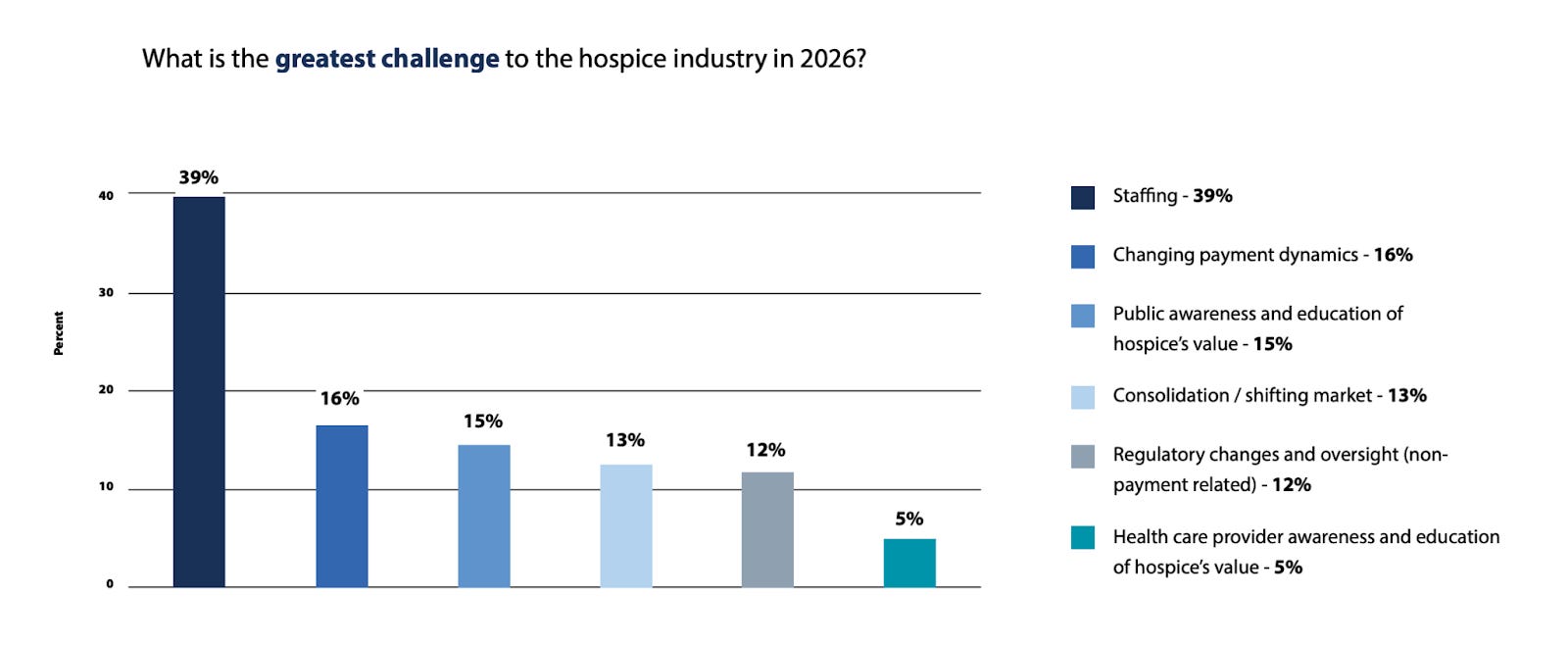
Ongoing workforce constraints continue to represent hospice leaders’ top concerns in 2026. Nearly 40% of respondents to Hospice News 2026 Outlook Survey cited staffing as the greatest challenge for providers this year. This is up from 35% year over year.
The staffing issue led the pack by a wide margin. The workforce problem was followed by changing payment dynamics (16%) and public awareness and education of hospice’s value (15%).
Results reflect the perspectives of 103 professionals who report working for organizations that provide hospice services. Among respondents, 61% hold executive leadership roles—including C-suite positions, vice presidents, and directors—offering an informed outlook on the state of the hospice industry in the year ahead. Thirty-four percent represent organizations with an average daily census of 300 or more, and 96% report that hospice care is included among their service lines.
Meanwhile, concern over regulatory changes and oversight declined significantly, dropping from 21% — the second-most cited challenge in 2025 — to 12%, ranking sixth in 2026.
Download the full report here.
Palliative care’s impact on payer star ratings
I also had a great conversation this week with Empassion Health’s CEO Robin Hefferman. Much of the discussion focused on the ways that palliative care can impact a payer’s Medicare star ratings and how that is driving investment.
However, due to the length of the Hospice News article I had to omit a portion of the interview that focused on the effectiveness of telehealth-based palliative care. You can find that additional material here.
Now, I think it’s time to pour more coffee and get going reporting today’s news!