

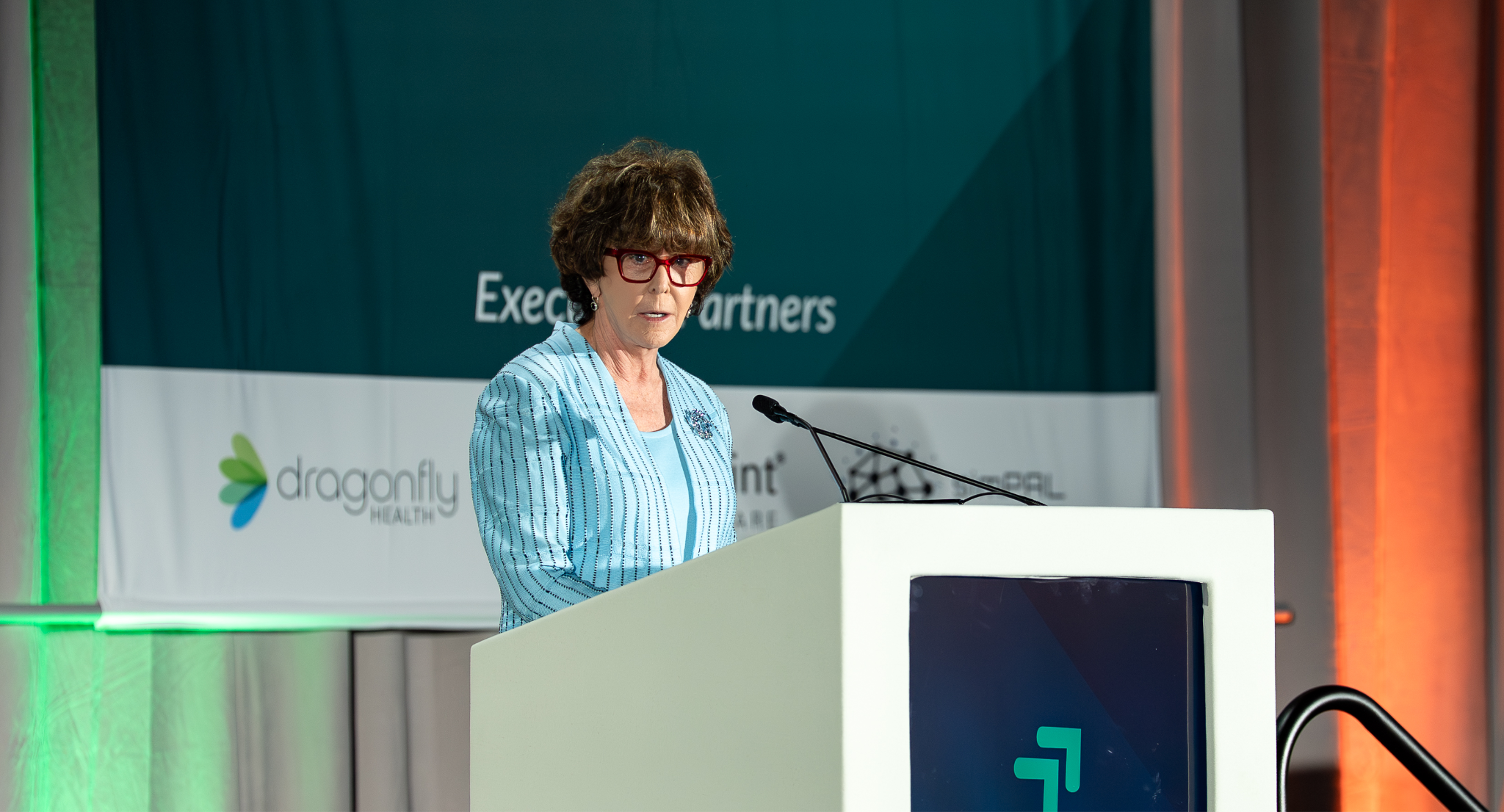
I am writing this at the National Partnership for Healthcare and Hospice Innovation (NPHI) conference in Chicago.
Before I get too deep into my thoughts for today, please check out my last post on how home-based care can relieve overcrowding elsewhere in the health care system.
The theme at NPHI this year is Quality in Action, and that concept guided many of the event’s discussions.
I had the opportunity to sit down with NPHI Founder and CEO Tom Koutsoumpas and President Carole Fisher to talk about a range of issues facing nonprofit hospices and the provider space in general. You can see our Hospice News coverage here.
I wanted to share some words from Koutsoumpas and Fisher that didn’t make it into the Hospice News article.
Fisher emphasized that ensuring patients have the best possible experience at the end of their lives should be the primary quality consideration for hospices. But also, from a business perspective, prioritizing quality can give hospices a competitive advantage in the marketplace.
“We’re at a time when quality is so important for so many different reasons. First and foremost, that people help people die well, and you only have one opportunity to do that — with patients, and then supporting caregivers and the loved ones,” Fisher told me. “Then equally important is taking care of this competition situation in so many of our members’ backyards, if you will. Competition is at an all time high. So how do you fight competition?”
NPHI exclusively represents nonprofit hospices, and when it comes to competition, for-profits are often top of mind. As of 2023, approximately 75% of the nation’s hospices were for-profit companies, a far cry from the industry’s origins. At its start, hospice was almost entirely a nonprofit enterprise.
However, any provider can leverage quality to give their businesses a leg up.
A key question is how we define “quality,” and that’s a more complex question than it may seem. I am reminded of Robert Pirsig’s book Zen and the Art of Motorcycle Maintenance, in which the author spent close to 500 pages trying to answer that question. So I am not going to attempt to give a comprehensive answer, but I will talk about some of the elements of quality.
A crucial component is regulatory compliance and strong performance on publicly reported quality measures such as data from the Hospice Outcomes and Patient Evaluation (HOPE) tool and Consumer Assessment of Healthcare Providers and Systems (CAHPS) surveys. These are vital indicators of a quality program.
But the story doesn’t end there. Quality also includes metrics such as reduced hospitalizations and emergency department visits, as well as more intangible factors like family and caregiver support, effective and compassionate bereavement care. It ties to an essential question at the philosophical center of health care: How does the patient feel? And, for hospices in particular, how does the family feel?
“In addition to all the scores, certainly patient and family satisfaction is a huge part of it, making sure that we continue to put the patient and family in the center. Those are quality elements. So are we really living up to that?” Koutsoumpas said. “Do we create an atmosphere of trust? That’s a quality issue. So those are things that we aren’t able to quantify in numbers in the kind of things that the regulatory world does. But quality, to me, is a lot more than that. It’s about going above and beyond.”

The business case for quality is multi-faceted. Solid performance demonstrates a hospice’s potential value to referral partners, as well as payers – especially as the health care system moves closer to a value-based environment. These entities want to work with hospices that can prove their value proposition, the cost savings they generate and the patient outcomes that they achieve.
Do you agree that “Quality is King” in hospice? I would love to hear your perspectives. Please feel free to comment or send me a message.