

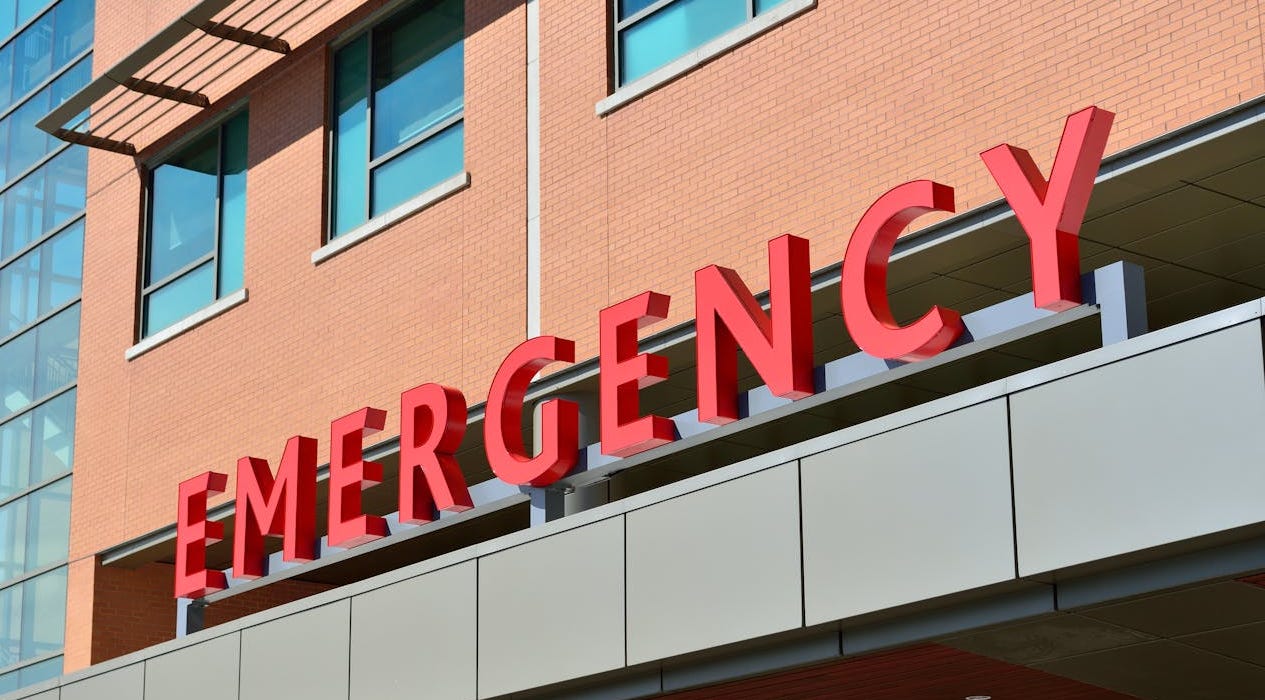
I read a disturbing article today in The Atlantic about a health care exigency that puts patients at serious risk nationwide — emergency department boarding. It’s an issue with implications for end-of-life care, and one that I think could be addressed through more timely access to at-home care, including for hospice.
I’ll share more thoughts on this piece below, but first, if you haven’t seen my post from last Thursday about the ways that hospice fraud is being politicized, check it out here.
And, if you’ll be at the NPHI Conference in Chicago this week, look for me or shoot me a note. I’ll be there and would love to connect with folks.
The Atlantic piece by Elisabeth Rosenthal, a former ED physician turned author and journalist, focused largely on her personal narrative about her late husband’s health care experience in hospitals near the end of his life, along with other valuable context. In at least once instance, he languished in an ED for days awaiting an inpatient bed, even though he had been admitted to the hospital (and was being charged an inpatient rate).
This is emblematic of a severe national problem that puts patients at risk.
“Emergency department (ED) boarding is a public health crisis in the United States, with harmful impacts on patients, hospital staff, and public safety,” the U.S. Agency for Healthcare Research & Quality (AHRQ) stated in a 2024 report. “Patients who are sick enough to require inpatient care can wait in the ED for hours, days or even weeks after a physician has decided to admit them while waiting for an inpatient bed to become available.”
Among 46.2 million hospitalized patients between 2017 and 2024, more than 40% were boarded in the ED for longer than four hours, and 6.3% were boarded for more than 24 hours, a 2025 study published in Health Affairs found. Now, 6.3% doesn’t sound like a huge number, but out of a population of that size it amounts to nearly 3 million people.
Other research bears this out. For patients whose acuity levels require immediate care (less than one minute), the average wait time is 28 minutes, according to data from the Government Accountability Office. The percentage of those visits in which the wait time exceeded recommendations was close to 74%.
For patients with “emergent” acuity, the recommended response time is one to 14 minutes, GAO indicated. But their average wait time is 37 minutes. More than 50% of cases exceeded the recommended time frame.
The causes of this are multi-faceted. Widespread staffing shortages throughout the health care system is a main driver, among a range of other factors. Also, as AHRQ lays out, hospitals have financial incentives to reduce bed counts and prioritize patients receiving more lucrative elective treatments.
“A longstanding focus on shifting the U.S. health care system toward outpatient care has reduced the number of available inpatient beds, while the number of ED visits requiring admission has increased,” AHRQ reported. “To ensure their financial well-being, hospitals prioritize higher revenue patients, such as those needing elective surgery, over lower-revenue patients, such as those admitted through the ED. Delays in discharging inpatients, including those resulting from prior authorization and other administrative requirements, prevent hospitals from making inpatient beds available efficiently for ED patients.”
Efforts to address this issue have trickled through the system. For example, the U.S. Centers for Medicare & Medicaid Services (CMS) has developed a voluntary reporting system for ED boarding times that will begin in 2027 and become mandatory in 2028.
But ultimately — despite a lot of talk — the system and government stakeholders are not doing enough.
“Despite more than 25 years of incontrovertible scientific evidence that the practice is associated with significant harm, little progress has been made in confronting its structural and economic drivers at a national scale,” AHRQ indicated.
The care-at-home solution
One potential mitigator for this crisis is rarely discussed: Care for more patients at home.
Earlier and easier transitions to hospice or home health have repeatedly been proven to reduce emergency department visits and hospitalizations, generating billions in cost savings and improving patient outcomes. Further investment in home-based services, including emerging models like hospital-at-home, could help relieve the burden on hospitals and prevent patients from suffering on stretchers in overcrowded ED hallways or overflow areas.
Of course, not every patient is eligible for hospices or home health, but I feel fairly certain that more could receive that care than actually do.
Hospice and home health providers can’t solve the problem of emergency department boarding, but they could definitely help. But first we have to help them.
Easing some of the restrictions for accessing those services, such as the woefully outdated six-month terminal prognosis requirement for hospice, could also foster greater utilization and help keep patients where they belong and where they prefer to be.
Home-based care providers should also be getting more robust reimbursement increases that actually meet or exceed inflation rates so they can increase capacity and improve access for more patients. This would only benefit patients, families, providers and the system at large.
I would love to hear your thoughts on issues in the larger health care system that hospices can help address. Please drop a comment or send me a message.
A strong Mobile Integrated Healthcare-Community Paramedicine program would be also very helpful. Not only does it compliment a county public health department but it could provide early detection for the need of hospice services.
I working in the Hospice industry for over a decade one clear problem is often we n doctors wait from the last moment to sign someone on hospice service. If this process was sped up then many would get better care