

I hope everyone enjoyed the long Memorial Day weekend, and that you also took a moment to remember and honor those who have fallen in service to our country.
Hospice News is a place for strict objectivity and factual reporting, but here at Inside Hospice I am able to be more expressive of my own opinions and perspectives. So, herein, I am going to do something I have never done before in my 26 years of journalism: I am going to endorse a piece of legislation.
I believe that Rep. Beth Van Duyne’s (R-Texas) recently proposed Protecting Seniors and Stopping Fraudsters Act represents a proactive, common sense approach to tackling hospice fraud. While a single bill or enforcement action is unlikely to eliminate all fraud, this could go a long way at stemming the tide of unethical and criminal behavior in the space.
I covered the bill in detail here on Hospice News. But here is a quick recap of its major provisions:
Increased survey frequency for newly enrolled hospices and home health agencies, providers with ownership changes, or providers displaying signs of fraudulent behavior
Enhanced screening requirements for providers deemed at “extreme risk” of fraud, including fingerprinting administrators and medical directors and requiring proof of liability insurance
Greater accountability for accrediting organizations through standardized survey training requirements
New beneficiary notification requirements to ensure seniors know when they have been enrolled in hospice and understand how to disenroll if fraud or abuse occurs
Annual reporting to Congress on U.S. Centers for Medicare & Medicaid Services (CMS) program integrity activities, enforcement actions, fraud trends, and efforts to reduce unnecessary administrative burden on legitimate providers
While more frequent surveys and enhanced screening requirements could become cumbersome for some providers, this may be a necessary sacrifice to save the hospice community from scammers. This could help identify the bad actors, as they are often called, earlier and more effectively. Key to this will be how it will be implemented. CMS, state agencies and accreditors will have to make sure they are looking for the right things on those surveys, including potential indicators of fraud.
Standardized training for accreditation agencies could support this. In the course of previous, award-winning reporting by Hospice News, we were told by multiple sources that many of the fraudulent companies were accredited. The California Hospice and Palliative Care Association (CHAPCA) also sounded the alarm on this in a 2024 letter to CMS.
Previous attempts by CMS or Congress to strengthen accreditation oversight and processes either didn’t go forward or didn’t accomplish much in terms of reducing fraud. Standardized training could improve accreditors’ effectiveness in fraud identification. This could also strengthen and inform the implementation of more frequent surveys, if that portion of the bill is enacted.
Full disclosure, prior to joining Hospice News, I worked in The Joint Commission’s publishing arm for 11 years. For most of that time my work was focused on the hospice accreditation manuals as well as patient safety issues.
Personally, I think notifying patients or issuing an explanation of benefits to patients when they are enrolled in hospice is a great idea. One common tactic used by these scammers is enrolling beneficiaries in the Medicare Hospice Benefit without their knowledge or consent. In some cases, these patients have been denied other forms of health care because, on paper at least, they were on hospice.
Due to payment cap restraints, this has also interfered with some beneficiaries ability to access the benefit when they truly became eligible. A notification could help alert patients to these practices and facilitate a swifter response.
Enhanced screening requirements for new hospice owners at extreme risk of fraud, including fingerprinting, could also help identify fraudsters as well as create new barriers to entry. Some owners and executives at fraudulent agencies have actually used fake identities or proxies to set up their hospices, something that enhanced screening could help mitigate. However, we will need specific, evidence-based criteria to define “extreme risk.”
Finally, greater oversight by Congress of CMS’ efforts to root out fraud would likewise be a good thing and could potentially strengthen the agency’s approach. I like that, under the bill’s current language, it would also take into account the potential burden on legitimate providers.
Rep. Van Duyne is a Republican, and I am not. But I believe that this is a time for solutions, not partisanship. I expounded on this in another recent Inside Hospice post. I have met and interviewed Rep. Van Duyne a couple of times, and she has been a tireless advocate for hospice program integrity.
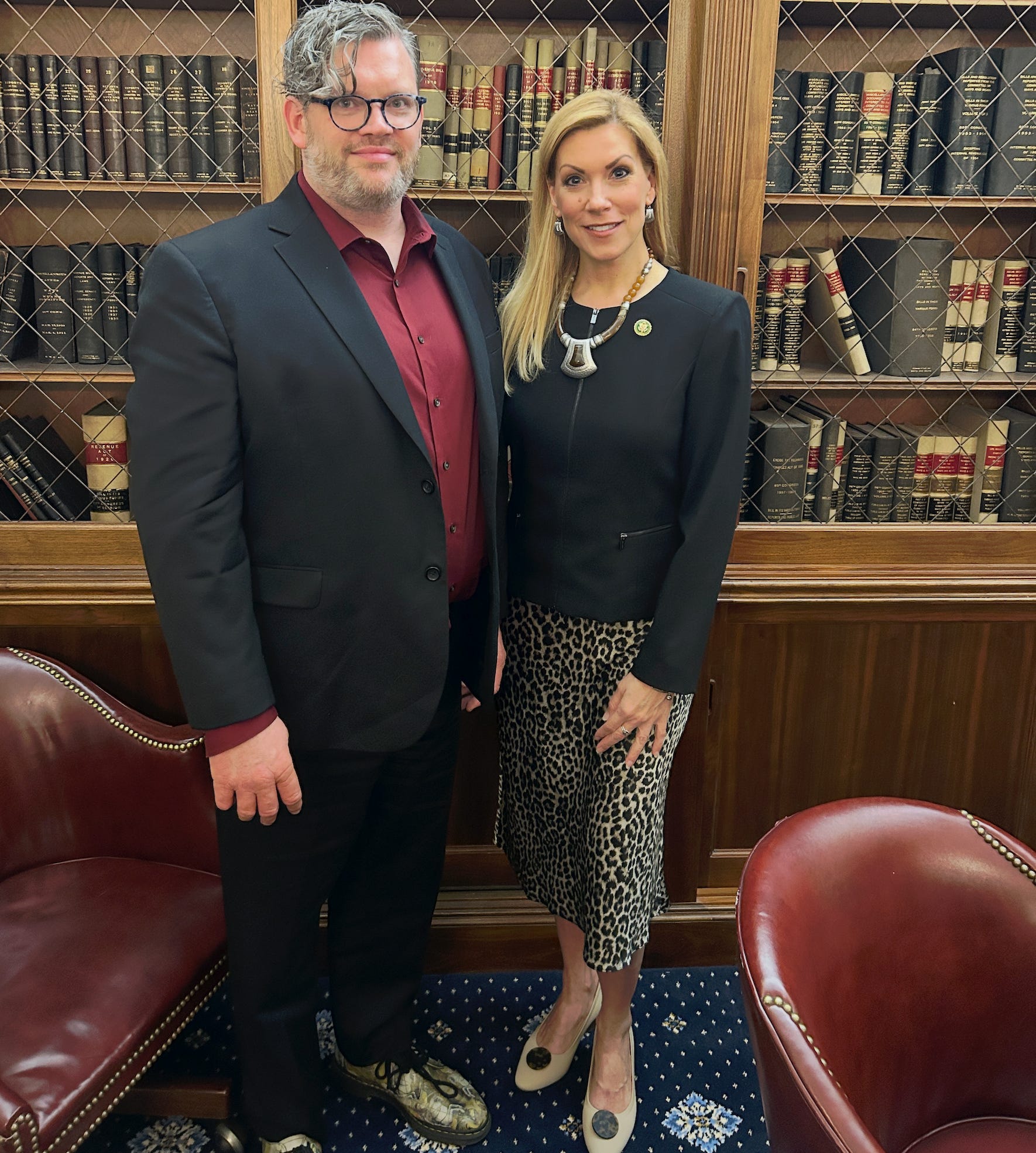
Congress should pass this bill, and it just might. The legislation recently cleared one hurdle in the legislative process; the House Ways and Means Committee has allowed it to move forward. Without this approval, the bill would have been dead on arrival.
To be honest, after more than two decades of trying to keep my personal opinions out of what I write, penning this endorsement feels kind of weird to me, a little like putting my left shoe on my right foot. Nevertheless, I stand by it.
I appreciate an honest opinion.
Dude - you're the editor of the hospice industry newsletter, let's not pretend that this little side gig is where you can let loose and say what you really want to say 🤷♂️
Also too - worst congressional session ever, the tiny majority can't legislate it's way out of a wet paper bag